SMR in Oak Ridge: NDT & QA for the Kairos Hermes Reactor
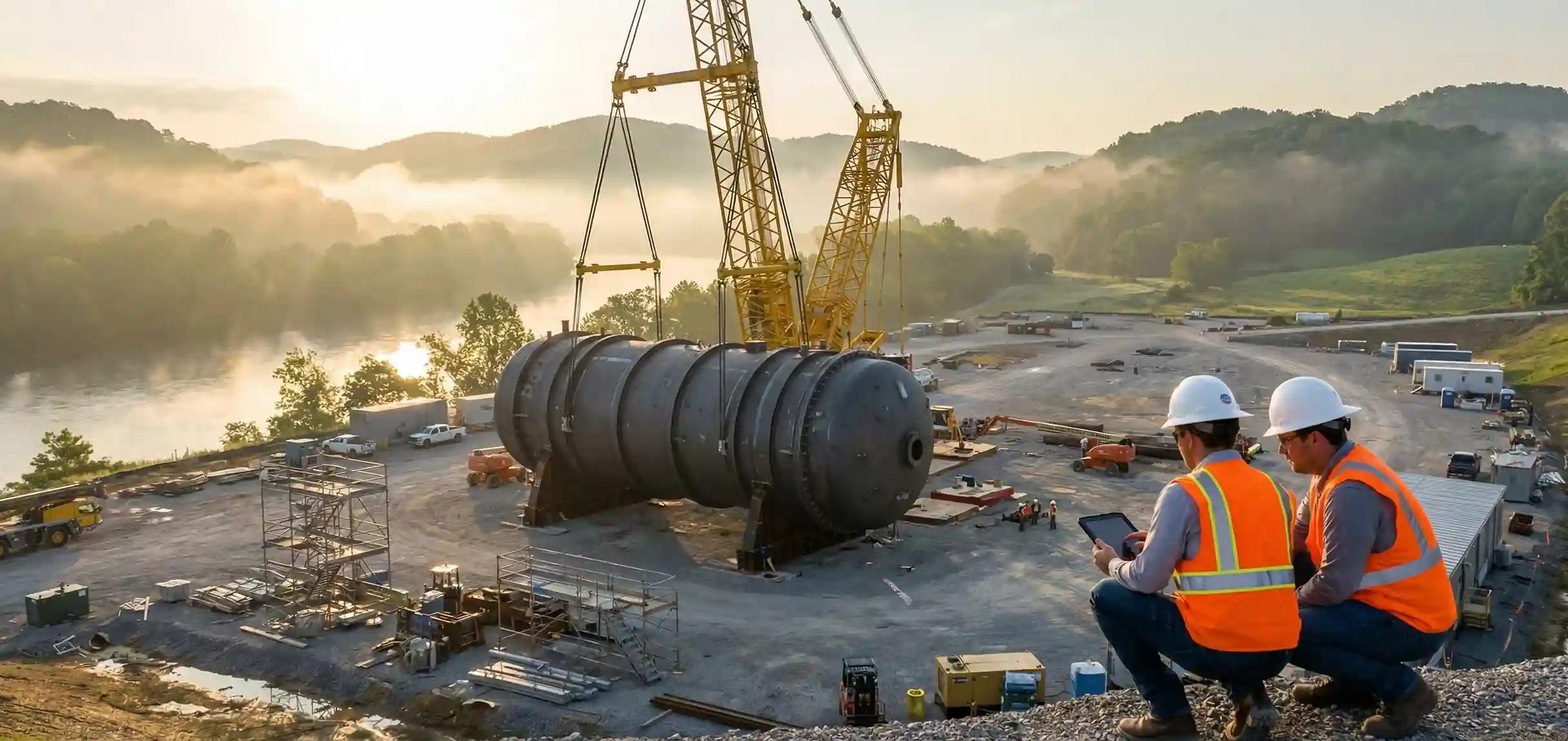
Oak Ridge, Tennessee, is once again at the center of a global energy revolution. With the construction of the Kairos Power Hermes reactor, the region is transitioning from its historic roots into the new era of advanced nuclear technology. Specifically, the development of SMR in Oak Ridge (Small Modular Reactors) represents a massive leap forward for the local supply chain.
However, this innovation brings a distinct challenge: modular fabrication. Unlike traditional plants built entirely on-site, the Hermes Low-Power Demonstration Reactor relies on components built in factories and shipped to the Heritage Center Industrial Park. For project managers and quality engineers, this means the margin for error is zero.
The integrity of a reactor pressure vessel or a fluoride salt heat exchanger cannot be assumed; it must be proven. Nondestructive Testing (NDT) is the only definitive way to validate these modular components before they ever reach the assembly site.
At TN NDT, we specialize in the SMR fabrication quality control necessary to ensure these advanced designs meet reality safely.
What is the Kairos Power Hermes Project?
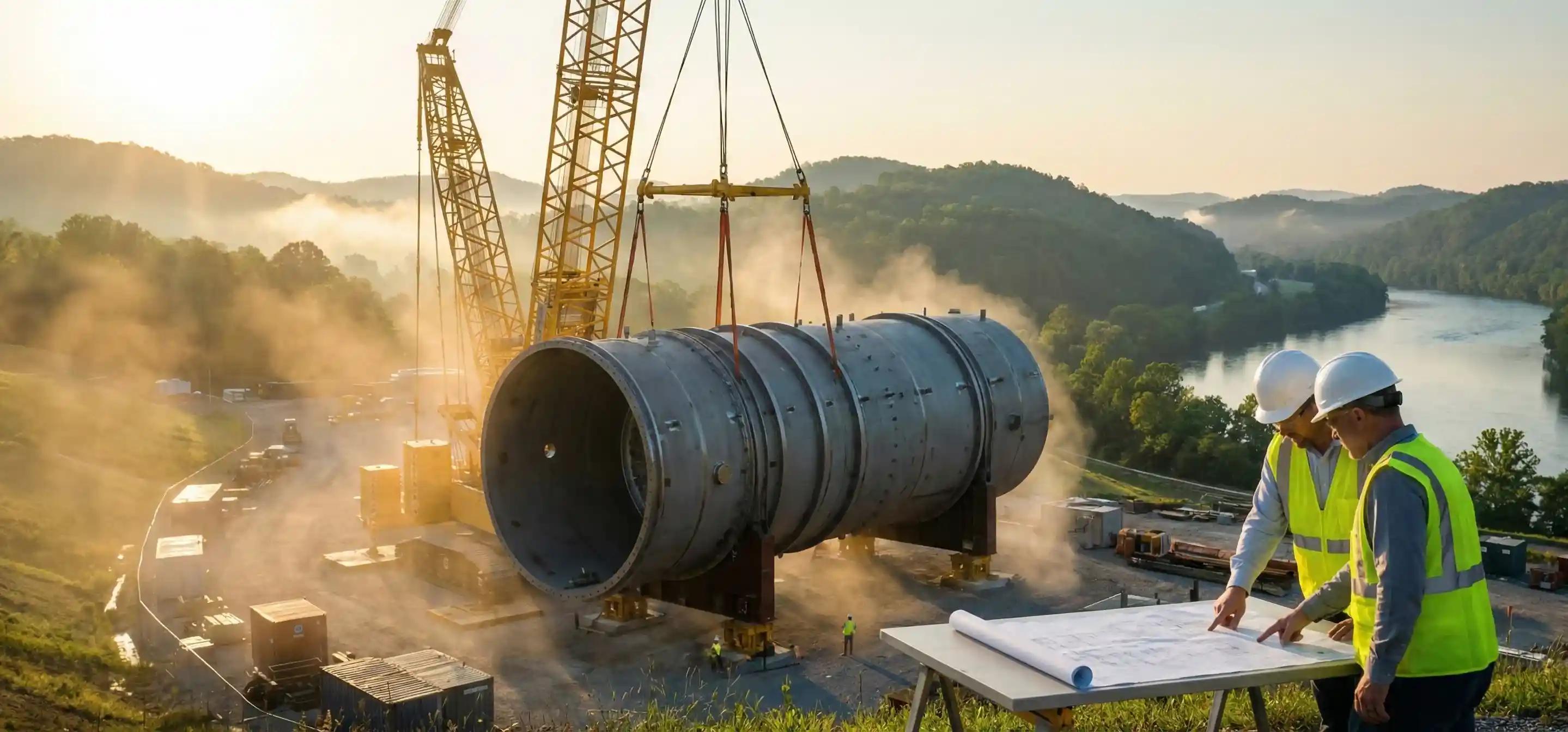
To understand the inspection needs, you must first understand the machine. The Kairos Power Hermes is not a traditional light-water reactor; it is a Fluoride Salt-Cooled High-Temperature Reactor (KP-FHR). It uses TRISO fuel pebbles and molten salt coolant (Flibe) to operate at low pressure but high temperatures.
Currently, the project is in a critical phase with the construction of the ETU 3.0 (Engineering Test Unit) at the East Tennessee Technology Park. This non-nuclear demonstration unit is paving the way for the full Hermes reactor.
Why This Matters for Fabrication:
Because Hermes is a "demonstration" reactor, regulatory scrutiny is intense. Every weld, valve, and pump is part of a proof-of-concept that will determine the future of nuclear energy in the United States. Vendors contributing to this project must adhere to the strictest quality standards.
Inspection Requirements: Navigating the "Hermes" Standards
Fabricating for an advanced reactor like Hermes does not mean rewriting the rulebook, but it does mean strictly following the hardest chapters. Despite its novel design, the Kairos Power Hermes inspection requirements are grounded in established codes.
The Code: ASME Section III
The backbone of compliance remains ASME Section III (Rules for Construction of Nuclear Facility Components). Whether you are fabricating the Reactor Pressure Vessel (RPV) or the containment structure, your NDT procedures—and the personnel performing them—must align with 10 CFR Part 50 and ASME standards.
The "PSAR" Factor
A critical document for any vendor is the Kairos Hermes PSAR (Preliminary Safety Analysis Report). This report, submitted to the NRC, outlines the quality assurance program required to prevent failures. It mandates that all safety-related components undergo rigorous volumetric integrity checks. If your NDT data is not NIST-traceable and audit-ready, the component will be rejected.
Critical NDT Methods for SMR Fabrication
Ensuring the safety of a modular reactor requires a multi-layered testing strategy. Below are the primary methods used to guarantee SMR nuclear testing standards are met.
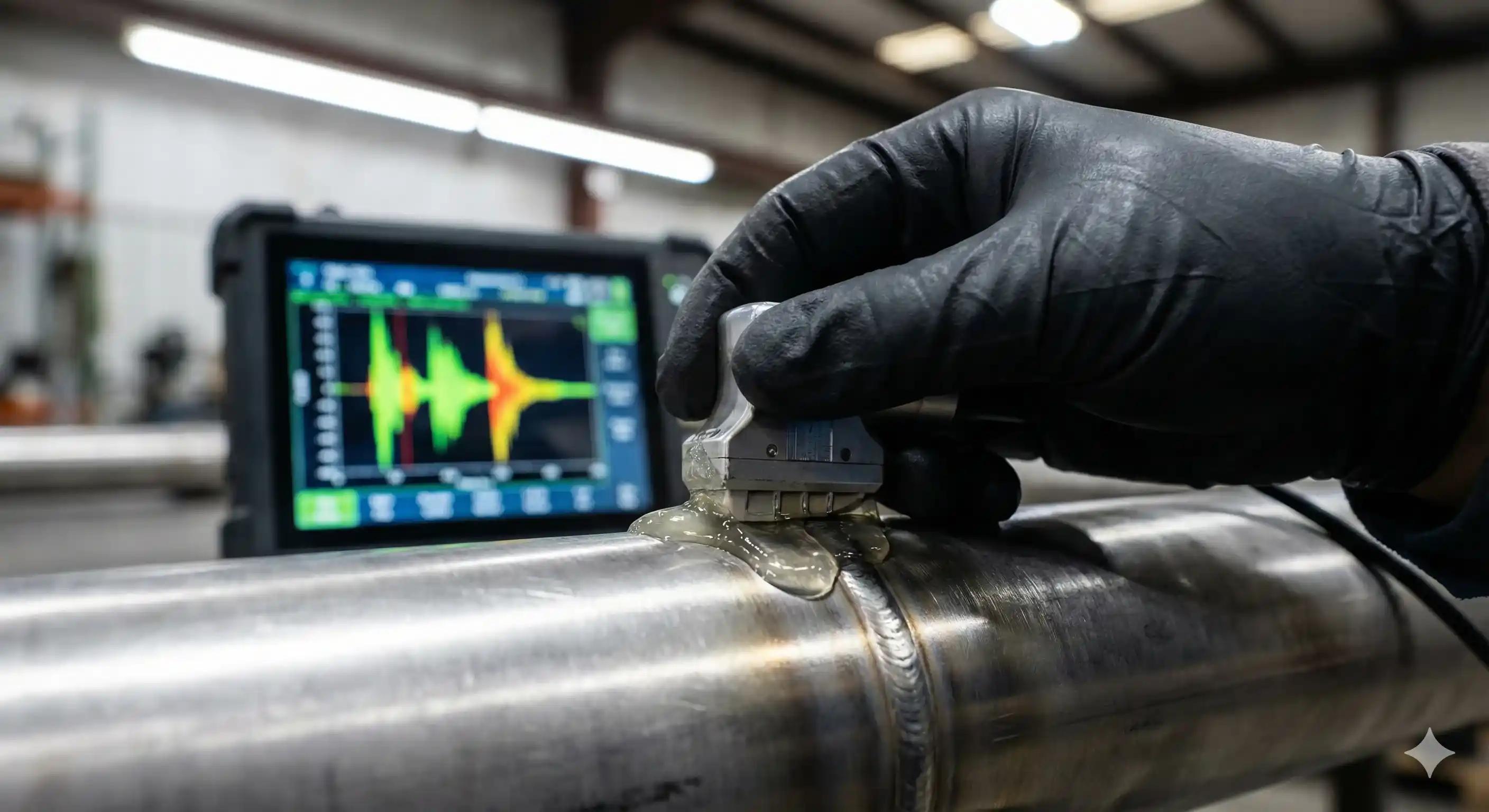
Ultrasonic Testing (UT) for Volumetric Integrity
The high operating temperatures of a KP-FHR demand advanced alloys. Ultrasonic Testing (UT) is the gold standard for inspecting these materials, particularly for the Reactor Pressure Vessel (RPV) and thick-wall piping.
- The Goal: Detecting subsurface flaw detection such as cracks, voids, or lack of fusion that are invisible to the naked eye.
- The Method: High-frequency sound waves are transmitted through the material. In advanced SMR applications, Phased Array Ultrasonic Testing (PAUT) is often used to map the internal structure of welds in 3D.
Surface Inspection (MT & PT) for Modular Components
Not all defects are deep. For precision-machined parts like valves, pumps, and heat exchanger tubing, surface-breaking defects are the primary concern.
- Liquid Penetrant (PT): Essential for non-magnetic materials (like stainless steel or advanced nickel alloys) used in the salt coolant loops.
- Magnetic Particle (MT): Used for ferromagnetic supports and structural steel to detect surface cracks caused by welding stress.
Visual Inspection (VT) & Welder Qualification
The first line of defense is always the eyes of a certified inspector. Visual Inspection (VT) verifies that structural welds meet the dimensional and workmanship standards of AWS D1.1 or ASME. Furthermore, Kairos Power Hermes reactor NDT protocols require that every welder working on the project be qualified for the specific procedures used.
The Role of Level III Consulting in Nuclear Compliance
A common hurdle we see in Oak Ridge is the "Nuclear Gap." Many excellent fabrication shops are unmatched in general industrial work but have never navigated NQA-1 (Nuclear Quality Assurance) standards.
This is where Level III procedure review nuclear services become a project-saver. Before you lay a single bead of weld, an ASNT Level III expert can:
- Review your NDT procedures to ensure they meet the specific "Kairos Hermes" specs.
- Audit your personnel certifications to prevent non-compliance reports.
- Validate your data packages so they sail through the NRC audit process.
SMR Component Inspection Matrix
For fabricators bidding on SMR contracts, understanding the specific testing needs for each component is vital. This matrix outlines the standard modular reactor vessel inspection requirements.
| SMR Component | Primary Defect Risk | Recommended NDT Method | Relevant Code |
|---|---|---|---|
| Reactor Vessel (RPV) | Subsurface Cracks / Voids | Ultrasonic Testing (UT) | ASME BPVC Section III |
| Heat Exchanger Tubing | Pitting / Wall Thinning | Eddy Current (ET) | ASME Section V / XI |
| Structural Welds | Lack of Fusion / Porosity | Radiography (RT) or UT | AWS D1.1 / ASME III |
| Valves & Pumps | Surface Cracks | Liquid Penetrant (PT) | ASME Section III |
Conclusion: Partnering for Nuclear Innovation
The deployment of SMR in Oak Ridge is more than just a construction project; it is a testament to East Tennessee’s leadership in energy innovation. From the ETU 3.0 to the full-scale Hermes reactor, the world is watching.
But innovation cannot exist without safety. For fabrication shops and prime contractors, the risk of a single bad weld is too high. You need a partner who understands both the local landscape and the rigorous demands of Kairos Power Hermes reactor NDT.
TN NDT provides the certified, local, and NIST-traceable expertise required to build the future. Don’t let compliance be the bottleneck in your supply chain.
Contact TN NDT today to schedule a Level III consultation or component inspection for your nuclear fabrication project.